

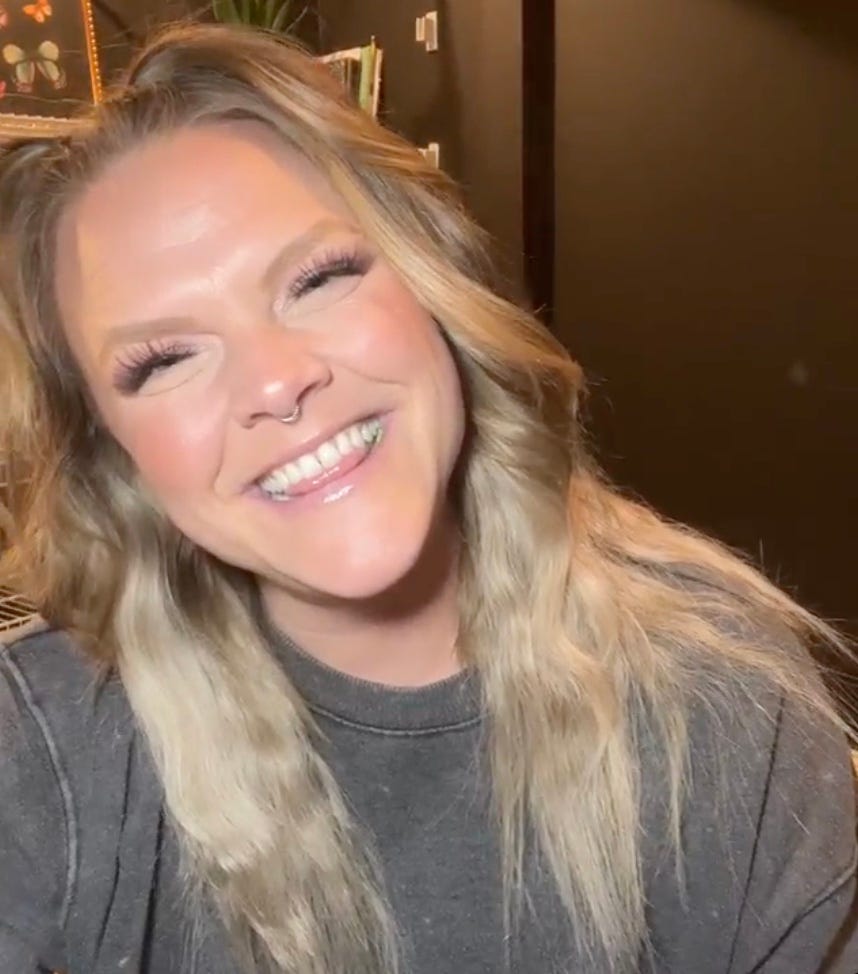
In this week's Sober Friends podcast, I invited Colbi F to share her sobriety story. After receiving feedback that Steve and I needed more female perspectives on the show, I've made a conscious effort to include diverse voices. What drew me to Colbi's message when I first encountered her on TikTok was her extraordinary energy and unwavering support for women who are sober curious or already in recovery. Her insights prove valuable for everyone on this journey, regardless of gender.

During our conversation, Colbi introduced a concept that struck me profoundly: the difference between "fitting in" and "belonging." She explained that while drinking, she could easily fit in with any group, yet never truly felt she belonged to any of them.
Initially, this distinction confused me. Aren't "fitting in" and "belonging" essentially the same thing? But as Colbi elaborated, the difference became clear. Fitting in meant transforming herself into whatever she believed was expected of her—becoming what she thought others wanted her to be. Belonging, in contrast, meant being accepted for who she truly was.

This revelation hit me with unexpected force. Fitting in, as Colbi described it, was like being a square peg desperately trying to squeeze through a round hole—melting and reshaping yourself just to pass through. The process consumes enormous energy and eventually erases your authentic self, all for the illusion of connection.
I recognized myself in her words immediately. As an introvert who's naturally shy, I've worked hard over the years to become more social. I have an instinctive tendency to guard myself, to keep people at a distance to avoid getting hurt. While sobriety has helped me address this behavior in healthier ways, alcohol once served as my primary solution.
When drinking, my inhibitions disappeared, and I could become the person I always wished I was—or so I thought. I felt looser, more relaxed, more capable of connecting with others. What I failed to realize was the disconnect between how I perceived myself and how others actually saw me.

When I believed I was being charismatic and funny, I was often just being insensitive or inappropriate.
The truth was painful but simple: I was never comfortable with my authentic self. I carried the belief that if people knew who I really was, they would reject me. With this mindset, what choice did I have but to create a character who embodied what I thought others wanted? This performance was difficult when sober but effortless when drinking—alcohol became my tool for shapeshifting.
This is no way to live. What was I really accomplishing if people liked a version of me that didn't truly exist? Wasn't I actually manifesting my deepest fear—that the real me wasn't enough?

In recovery, particularly through 12-step programs, you begin the work of becoming comfortable with who you are. More importantly, you learn to accept yourself. For years, I refused this acceptance because I disliked the person I had become. Alcohol served as the bridge to the person I thought I should be.
But true acceptance means suspending judgment. It's neither good nor bad that my personality is a certain way—it simply is who I am. I can't fundamentally change my personality any more than I can decide to be left-handed after writing with my right hand my entire life. With practice, I might become proficient with my left hand, but my instinct will always be to reach with my right.
Instead of fighting against my nature, I should have recognized my strengths. I spent years lamenting what I lacked—athletic ability, musical talent, extroverted charisma, physical attributes. But what gifts did I possess? I'm an exceptional listener. In social settings, I genuinely prefer when others do the talking while I listen attentively. I excel at asking thoughtful questions and approach conversations with authentic curiosity. When you give others space to speak, you discover the fascinating stories they carry—everyone has a unique narrative worth hearing.

I wish I could say I've mastered all of this, but that would be untrue. I'm still learning, still growing. I've come to accept that complete understanding isn't the goal—success is simply remaining open to learning more and striving to be my best self each day.
If only I had discovered years ago what I know now: there's profound power in authentic existence. Being genuinely positive and caring is rare in today's world. I continuously strive to embody positivity, though I sometimes still hear that I can be negative. These comments sting, but they don't deter me from aspiring to be the positive role model I've always sought.
How does this resonate with you? Have you also experienced the struggle of fitting in without truly belonging? What did this look like in your life? What role did alcohol play in this dynamic? If you're now sober, what has changed for you?
Please share your thoughts in the comments below. Your story might be exactly what someone else needs to hear to find hope in their own journey.