


In a world that seems to reward loudness over thoughtfulness, I've been reflecting on what happened to kindness and tolerance. As a news nerd from a very young age, I'm stunned by what passes for normal discourse today. Across the political spectrum, nastiness thrives—and worse, we've become experts at justifying it.
What happened to extending kindness? What happened to putting daisies in the rifle of a soldier?
A Personal Confession
I need to tell on myself here. I can be a real jerk. Just ask anyone who knows me. I've had to scrub my social media profiles of all the thunderstorms I've caused and the attention they created. I'm as guilty as anyone of contributing to this culture of division.
What's different about me now is that I'm committed to changing my behavior.
Lessons from the Rooms
I've learned about kindness from the rooms of Alcoholics Anonymous—though I can't say I learned what I should have immediately. But finally, I started absorbing the lessons I needed. I guess I decided to be a grown-up instead of an overgrown child.
Twelve-step groups taught me that resentments would not just lead me to drink again, but that they were downright deadly. And here's my shameful secret: I've been a collector all my life. Baseball cards, comic books, and yes, more microphones than I could ever use. But my greatest and proudest collection? Resentments.
There is nothing that helps me justify why my life is terrible more than the resentments I collect. I know that letting them go would improve my life, but then I'd have to take responsibility and change if I abandoned those warm, cozy resentments.
An Unexpected Lesson in Kindness
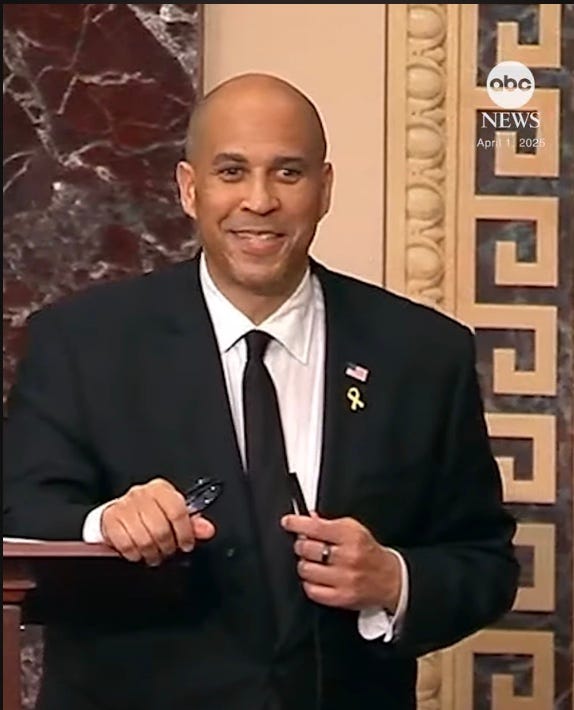
This path to thinking about being more kind—and how I want it to be as easy as dunking on people—came to me while watching New Jersey Senator Cory Booker making his historic speech in the US Senate last week.
I hope you'll indulge me regardless of your politics. I rolled my eyes when Booker's speech was announced. I really hate grandstanding events like this, and that's how I saw it. Someone talking for a day, non-stop—what would it accomplish?
I was wrong.
The tone of his speech was not of hate, but of love, especially the love taught through Christianity. What really caught my attention was his tribute to John Lewis.
For those who don't know, John Lewis was a civil rights leader who marched alongside Martin Luther King Jr. in the 1960s. Lewis was a key figure in the movement, famously marching in Selma on "Bloody Sunday," and later spending over three decades in Congress fighting for voting rights and social justice. Lewis was repeatedly beaten in the 1960s during his crusade for equality. It would have been easy to give up after the first march across the Edmund Pettus Bridge. But he didn't. And in the end, even though it took time, Lewis earned widespread respect because of the pain he endured for his beliefs in equality.
The Attractive Power of Positivity
Why are people like this so attractive? I believe human nature tends toward negativity. That's why trolling on social media is so appealing—it plays to our base emotions. But doing something positive is hard. That's why we are inspired by it; it runs counter to our default setting.
It made me think about what I've learned in recovery. We have a lot of equality in recovery spaces. It doesn't matter if we're male or female, gay or straight, Black or white. What binds us is our shared experience with alcohol—how it affects us and makes us want more. When you think and see that way, it helps you look past the surface.
An Invitation to Kindness
Don't think I'm naive. I see flaws and there are many times when there are people I would not choose to hang out with. But even when someone is really annoying me, I try to challenge myself to see the good and to understand why they might be behaving the way they are.
Would you join me in being a little kinder? In a world that profits from our divisions, perhaps the most radical act is choosing to see beyond our differences and extending compassion—especially when it's difficult.
After all, isn't that what recovery teaches us? To face the hard things with courage rather than numbing ourselves to the challenge?